How to prepare for new ESG requirements in waste management
European legislation in the field of ESG is evolving rapidly – and although some obligations are expected to be simplified within the so-called Omnibus package, requirements for reporting non-financial data in the area of circular economy and resource management remain relevant in the current draft.


Cyrkl Consulting
08/17/2025 8:54 AM
For corporate ecologists, now is the ideal time to start planning, collecting data, and pilot-testing processes.
What the new voluntary VSME standard brings
In July 2025, the European Commission, based on the proposal of the European Financial Reporting Advisory Group (EFRAG), adopted recommendations on the use of the voluntary non-financial reporting standard (VSME). It is intended not only for small and medium-sized enterprises, as a voluntary and transitional tool to prepare for future mandatory non-financial reporting.
This standard covers similar thematic areas as the ESRS (European Sustainability Reporting Standards), but works with a smaller amount of data and a simpler approach. It is divided into two levels:
Basic Module
Includes 11 key indicators – e.g. water and energy consumption, greenhouse gas emissions Scope 1 and 2, workforce issues, or anti-corruption measures. Reporting companies can choose only those essential for their activities.
It also includes the environmental indicator “Resource use, circular economy, and waste management” – i.e. resource use, circular economy, and waste management.
Companies are expected to report especially:
- material consumption (including packaging, if significant),
- total waste volumes (broken down into hazardous and other),
- waste minimisation strategy,
- recycling activities,
- circular initiatives.
The reporting is concise, voluntary, and adapted to smaller firms – companies can choose which data to disclose.
Comprehensive Module
Expands the basic module with additional environmental topics such as:
- emission reduction targets,
- transition plan towards sustainability,
- climate risk analysis.
The reporting framework is flexible – companies can add circular economy data (targets, degree of circularity, recycling projects) according to the significance of their impact on activities.
Why act now
The upcoming Omnibus package is expected to simplify some ESRS requirements, but in the current proposal, mandatory indicators for measuring resource inflows and outflows – including packaging and waste – remain in the area of circular economy and resource management.
The final version of the VSME standard is expected to be adopted in the coming months in the form of a delegated act. We recommend using this period to prepare, especially for those who already need to provide non-financial data to their customers or banks. The VSME standard can make it easier for small and medium-sized enterprises to set up data collection methodology, which in the future may be crucial for their competitiveness and access to financing.
For large companies, the use of the VSME methodology can reduce administrative burden and streamline data collection in supply chains, thereby increasing the consistency and reliability of non-financial information.
Our recommendations for corporate ecologists
- Start collecting data now – even in a pilot, test form.
- Conduct a waste scan – map individual material flows and identify cost-saving and circular initiatives that will increase the company’s competitiveness and reputation.
- Implement a circular audit (e.g. according to the methodology of the Ministry of Industry and Trade) and apply innovations: recycling, water savings, emission reduction.
- Monitor current developments and share good practice – make use of conferences and webinars dedicated to the topic.
How we can help you
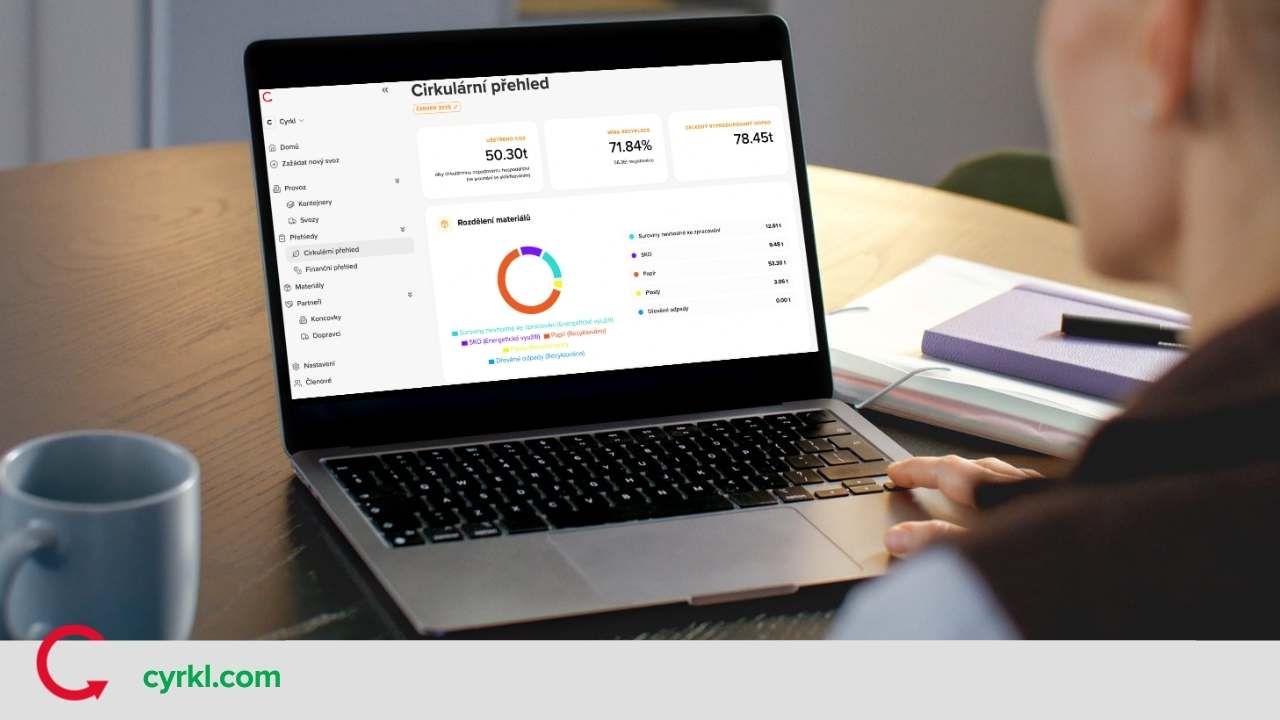
We offer comprehensive waste management – from analysis and optimisation of waste streams to practical implementation of cost-saving solutions.
Our work also includes Material Flow Mapping – detailed mapping of material flows in your operation, which reveals weak points, inefficient processes, and new opportunities for resource use. Contact us if you are interested in carrying out a circular audit, the results of which we will be happy to help you implement further.
Our goal is to set up processes so that they are in line with current and upcoming circular economy legislation, while also delivering measurable financial results.
Invite us to your tender and discover how we can help turn your waste management into a competitive advantage.
Are you interested in learning how your company can save on waste management and achieve its environmental goals?
Schedule a free consultation with our experts.